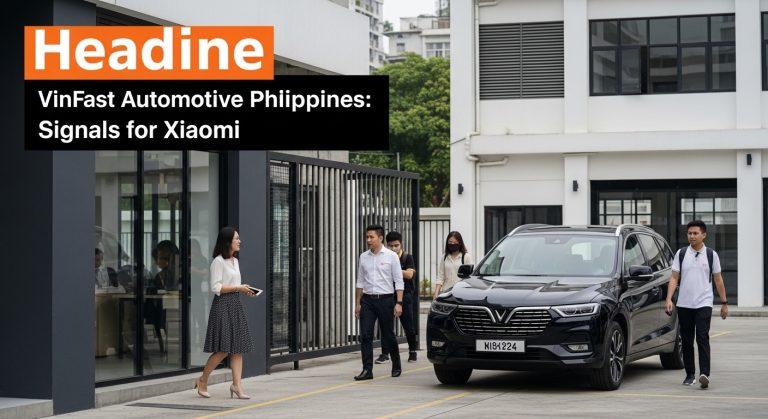

gac Automotive Philippines is at a pivotal moment as it coordinates a dealer-wide rally and previews the GS8 HEV, signaling a deliberate push into the Philippines’ automotive market. The move comes as Philippine buyers increasingly weigh hybrids, SUVs, and value, and it places the brand in a crowded field where distribution, aftersales support, and local market fit matter as much as product portfolios.
Market positioning and dealer network
GAC Philippines’ dealer rally and GS8 HEV preview highlight a strategy to align channel partners behind a shared value proposition. The dealer network in a dispersed archipelago requires standardized training, inventory planning, and spare-parts logistics across city and provincial markets. Analysts note that a successful rollout hinges on service density as much as showroom presence, because consumer trust in maintenance and parts availability often determines the viability of new brands in the Philippines. By centralizing messaging and providing clear product differentiation—hybrid powertrains for efficiency, with SUV practicality—the company seeks to shorten the learning curve for both sales staff and customers while attempting to minimize the risk of miscommunication at the point of sale. The approach reflects a broader trend among Chinese and regional brands expanding into Southeast Asia: the emphasis on network effects that sustain long-term brand equity rather than single-model excitement.
Product previews and technology strategy
The GS8 HEV preview situates GAC within a segment that blends SUV versatility with hybrid efficiency, a combination that could appeal to family buyers and fleets alike. In markets with rising fuel costs and shifting emission expectations, a hybrid SUV can offer a middle path between traditional gasoline models and full electrics, balancing upfront price with running costs. The preview also serves as a testing ground for what features and trims resonate in urban centers versus provincial towns, informing pricing, marketing, and aftersales readiness. Beyond the GS8 HEV, the brand’s broader technology strategy will be judged by how quickly it translates into reliable service, transparent warranty terms, and accessible spare parts, all critical to sustaining a favorable perception among first-time buyers and existing customers who may be wary of unfamiliar brands. The competitive landscape in the region includes established Toyota, Hyundai and local and regional players, with launches and refreshes signaling that the Philippine market continues to reward compelling value over mere badge recognition.
Consumer and fleet implications
For everyday buyers, total cost of ownership will be a decisive factor. Hybrid SUVs may carry a higher upfront price relative to gasoline-only rivals, but lower fuel bills and potential tax or incentive considerations could tilt the balance over a typical ownership horizon. For fleets and corporate buyers, dealer support programs, maintenance packages, and predictable spare-parts availability will be as important as the vehicle’s fuel efficiency. GAC Philippines’ emphasis on a renewed dealer network could translate into more consistent aftersales experiences, which, in turn, reduces downtime for fleet operations and improves resale confidence for individual buyers. In this context, customers will evaluate not only the GS8 HEV’s performance but also the breadth of local service centers, training for technicians, and the speed of warranty service.
Competitive landscape and policy signals
The Philippines’ auto market is undergoing a process of modernization that attracts both global brands and regional players. Recent coverage of Denza Philippines’ expansion plans and comparisons with established brands like Hyundai underscore the diversity of offering in this space, from compact hybrids to more ambitious electric-oriented programs. While policy signals for electrification vary by city and utility, the practical choice for many buyers remains pragmatic: hybrid powertrains that deliver real-world fuel savings, supported by a dependable dealer network and transparent aftersales terms. GAC Philippines’ dealer rally strategy appears to be a bid to convert early interest into sustained demand, particularly as consumer awareness grows about hybrid SUVs and their total cost of ownership relative to traditional models.
Actionable Takeaways
- Monitor how the dealer-network expansion affects aftersales quality, parts availability, and customer satisfaction in major urban hubs and provincial towns.
- Assess the GS8 HEV’s drive experience, fuel economy in local conditions, and total ownership cost relative to key rivals in the segment.
- Evaluate financing options, warranty terms, and service packages as a deciding factor for both private buyers and fleets.
- Track regional competitive moves (such as Denza and Hyundai’s new launches) to gauge how GAC Philippines positions itself on value, technology, and support.
- Observe policy signals and incentive framing for electrified powertrains and hybrids, and how they influence consumer perception and education campaigns.